How to Know the Best Cable Size for Any Solar Load
When designing a solar system, one critical component often overlooked is the wiring. Choosing the wrong cable size can lead to energy losses, overheating, and even fire hazards. In this guide, you’ll learn how to select the correct cable size for any solar load, whether for home, office, or industrial systems.
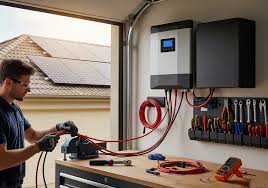
1. Why Cable Size Matters in Solar Systems
- Voltage drop: Using a cable that’s too thin can cause a voltage drop, reducing system efficiency.
- Overheating risk: Undersized cables heat up under load, which can damage insulation or appliances.
- Safety: Proper cable sizing ensures safe operation and extends the life of your solar components.
💡 Rule of Thumb: Always slightly oversize cables for solar systems to handle surges and future expansions.
2. Factors to Consider When Choosing Cable Size
- Current (Amperage) of the Load
- Check the maximum current your solar system will draw.
- Formula: Current (A) = Power (W) ÷ Voltage (V)
- Example: 1,000W load at 48V → 1,000 ÷ 48 = 20.8A
- System Voltage
- Higher voltages allow smaller cables for the same power.
- Common voltages: 12V, 24V, 48V for batteries; 120V–240V AC for appliances.
- Cable Length (Distance)
- Longer cables require thicker wires to prevent voltage drop.
- Recommended voltage drop: ≤3% for DC, ≤5% for AC.
- Voltage drop formula:
Voltage Drop (V) = Current (A) × Length (m) × 2 × Resistance (Ω/m)
- Type of Cable
- Use solar-rated cables (UV-resistant, weatherproof).
- Copper cables are preferred for high conductivity; aluminum cables are less efficient but cheaper.
- Future Expansion
- Oversize slightly to accommodate extra panels or batteries later.
3. Common Cable Sizes for Solar Systems
| System Voltage | Max Current | Recommended Cable Size (mm²) |
|---|---|---|
| 12V | 10–20A | 4–6 mm² |
| 12V | 20–30A | 6–10 mm² |
| 24V | 20–40A | 6–10 mm² |
| 48V | 20–60A | 10–16 mm² |
| High-power (1–5kW) | 60–100A | 16–25 mm² |
💡 Tip: Always check manufacturer specifications for inverters, batteries, and charge controllers.
4. How to Calculate Cable Size Step by Step
- Determine load power in watts (W).
- Identify the system voltage.
- Calculate the current: Current (A) = Power ÷ Voltage.
- Determine the distance between the power source and the load.
- Use voltage drop formulas or online calculators to find the minimum cable cross-section.
- Round up to the nearest standard cable size for safety.
5. Practical Examples
Example 1: Small Solar System
- Load: 500W
- Voltage: 12V
- Distance: 5 meters
- Current = 500 ÷ 12 = 41.6A
- Recommended cable: 10 mm²
Example 2: Medium Solar System
- Load: 3kW
- Voltage: 48V
- Distance: 10 meters
- Current = 3,000 ÷ 48 = 62.5A
- Recommended cable: 16 mm²
6. Safety Tips for Solar Wiring
- Use fuses or breakers at all major connections.
- Avoid running cables near heat sources.
- Ensure all connections are tight and corrosion-free.
- Label your cables clearly for easier maintenance.
✅ Conclusion
Choosing the right cable size for your solar system is essential for efficiency, safety, and system longevity. Always calculate based on current, voltage, distance, and load, and consider oversizing slightly for future needs. Using the right cables ensures your solar system runs smoothly and safely, whether it powers a small home or a heavy-duty AC and freezer setup.