The Unspoken Rules of Solar Installation No One Tells You
What They Don’t Teach You in Solar School
Let’s be honest — no matter how much training you get, the real lessons of solar installation start on the job.
When I began installing solar systems, I quickly realized that textbooks and YouTube tutorials don’t cover everything.
Sure, you learn the basics — wiring, mounting, inverter setup, and system testing — but what about the little things that separate a rookie from a pro?
That’s where the unspoken rules of solar installation come in. These are the quiet truths every seasoned installer knows but rarely talks about.
If you’re new to the solar game, this guide will help you avoid common pitfalls and work smarter, safer, and more efficiently.
Let’s get into it.
⚡ 1. Never Rush the Site Assessment
The most expensive mistake you can make as a solar tech is skipping details during the site assessment.
That roof pitch you thought was “close enough”? It affects energy output. That shade from a nearby tree? It’ll cost your client efficiency.
Takeaway: Spend time measuring, analyzing, and doing your solar sizing calculations correctly before you even unpack a panel.
Use tools like the Globisun App to estimate loads, design setups, and calculate panel requirements on-site.

🧰 2. Always Label Everything
Future you (and the next tech after you) will thank you.
Label your wiring, breakers, junction boxes, and even battery terminals. Clear labeling saves hours during maintenance or troubleshooting.
Pro tip: Use weather-resistant labels — regular stickers fade fast in the sun.

🌤️ 3. Morning Installs Beat Afternoon Installs
If you’ve ever mounted panels under the afternoon sun, you know what I mean.
Early morning work is cooler, safer, and easier. Panels are less hot (so fewer burns), and your efficiency skyrockets.
Takeaway: Schedule roof work early, and handle wiring and testing later in the day.
🔧 4. Respect the Roof
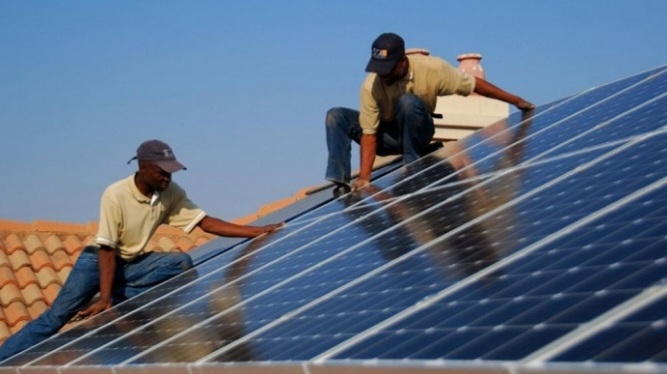
The roof is not just your workspace — it’s your client’s property and their trust.
Avoid walking directly on fragile tiles or roofing sheets. Always distribute your weight using crawl boards when necessary.
Unspoken truth: One cracked roof tile can ruin your reputation faster than a bad inverter connection.
⚙️ 5. Torque Wrenches Are Not Optional
Loose bolts = rattling panels.
Over-tightened bolts = cracked frames.
A torque wrench ensures you hit the manufacturer’s recommended torque settings every time.
Pro tip: If you’re still using a regular spanner for everything, it’s time to upgrade.

⚡ 6. Keep DC and AC Lines Separate
It’s not just good practice — it’s code compliance and fire safety.
Separate conduits reduce interference, make future maintenance easier, and minimize the risk of shorts.
Takeaway: Always plan your cable runs before starting installation.
🔋 7. Battery Ventilation Is Non-Negotiable
If your installation involves batteries, proper ventilation is key.
Even sealed batteries release heat and occasional gas. Trapping them in a tight space leads to faster degradation and potential hazards.
Pro tip: A small vent or cooling fan can extend battery lifespan significantly.
🧠 8. Double-Check Polarity Every Time
Everyone makes mistakes — but connecting polarity wrong can fry components instantly.
Before connecting your final cables, use a multimeter to confirm polarity.
It takes 10 seconds and can save you thousands in replacement costs.
💡 9. Keep a “Go Bag” of Essentials
Every experienced solar installer has a personal toolkit — that one bag that goes everywhere.
Mine includes:
- Multimeter
- Wire stripper
- Cable ties
- Spare fuses
- Electrical tape
- Insulation gloves
- Panel cleaning cloth
Pro tip: Restock your bag after every job. Running out of tape mid-install is embarrassing (trust me).

🌍 10. Never Stop Learning
The solar industry evolves fast — new inverter models, lithium batteries, mounting systems, and AI-based sizing tools are popping up yearly.
The moment you stop learning, you start falling behind.
Use apps like Globisun to stay updated on solar sizing, load calculations, and system design wherever you are.
Conclusion: The Quiet Code of Solar Professionals
These unspoken rules of solar installation are what turn a basic installer into a trusted professional.
They’re not just about getting the job done — they’re about doing it right, every single time.
If you’re serious about mastering your craft, keep learning, stay meticulous, and let tools like Globisun simplify your work.
Because in solar installation, it’s the small details that make the big difference — and those who know them quietly stand out from the rest.