🪫 Choosing the Right Battery for Your Solar System: Lithium vs Tubular vs AGM
As the world shifts toward clean energy, more homeowners are turning to solar power as a reliable electricity source. Businesses are also finding it cost-effective.
A solar system is only as good as its battery. The battery is the heart that stores your power for night use or cloudy days.
Choosing the right solar battery isn’t just about capacity. It’s about chemistry, performance, and compatibility with your solar inverter and charge controller.
I am a certified solar professional with years of hands-on experience. I’ve seen systems fail not because of the panels but because of poor battery choices.
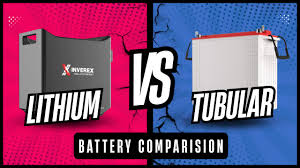
In this article, we’ll compare the three most common solar battery types. These include Lithium, Tubular, and AGM. We will break down their pros, cons, lifespan, and ideal use cases.
By the end, you’ll know exactly which battery suits your setup. The Globisun App can help you size and match batteries precisely with your solar inverter.
⚡ 1. Understanding Solar Battery Types
a) Lithium-Ion Batteries
Lithium batteries have become the gold standard in modern solar systems. They are lightweight, compact, and highly efficient.
You can charge and discharge them up to 5,000 cycles or more. They offer over 10 years of service life if maintained properly.

Advantages:
- High depth of discharge (up to 90%)
- Faster charging and higher efficiency (95–98%)
- Compact and maintenance-free
- Longer lifespan and remote monitoring options
Disadvantages:
- Higher upfront cost
- Sensitive to high temperatures
- Requires a compatible charge controller and BMS (Battery Management System)
Best for: Homeowners and businesses seeking long-term reliability, minimal maintenance, and space efficiency.
b) Tubular Lead-Acid Batteries
Tubular batteries are robust and proven for solar applications, especially in hot climates like Nigeria.
They use a thicker positive plate design, allowing deep cycling and better performance than regular flooded lead-acid batteries.

Advantages:
- Rugged and heat-tolerant
- Affordable and widely available
- Good performance in off-grid systems
- Lifespan of 4–6 years with proper maintenance
Disadvantages:
- Requires regular topping up with distilled water
- Heavier and larger than lithium
- Lower efficiency (~80–85%)
- Slower charging rate
Best for: Off-grid setups or backup systems where budget is a key factor and periodic maintenance is acceptable.
c) AGM (Absorbent Glass Mat) Batteries
AGM batteries are a type of sealed lead-acid (VRLA) battery designed for maintenance-free operation.
They’re commonly used in small solar systems, UPS backups, and hybrid installations.

Advantages:
- Maintenance-free and sealed (no water topping)
- Can be installed indoors safely
- Decent performance for light to moderate loads
Disadvantages:
- Shorter lifespan (2–4 years)
- Lower depth of discharge (~50–60%)
- Not ideal for deep cycling
- Sensitive to overcharging
Best for: Small-scale solar setups, backup power for offices, or light home use.
🔋 2. Comparing Battery Performance Metrics
| Feature | Lithium | Tubular | AGM |
|---|---|---|---|
| Lifespan (Years) | 10–15 | 4–6 | 2–4 |
| Depth of Discharge | 80–95% | 50–70% | 50–60% |
| Efficiency | 95–98% | 80–85% | 75–85% |
| Maintenance | None | Regular | None |
| Cost | High | Medium | Low |
| Ideal Use | Long-term solar, hybrid | Off-grid, rural | Backup, light load |
⚙️ 3. Common Battery Sizing Mistakes
Even the best battery will underperform if it’s not sized correctly.
Many installers or homeowners make these common errors:
- Using batteries that can’t handle inverter capacity.
- Mismatching battery bank voltage (e.g., 12V batteries on a 48V inverter without proper configuration).
- Ignoring load duration and peak power draw.
- Combining new and old batteries in one bank.
This is where technology can help.
The Globisun App provides precise and accurate solar sizing. It calculates the exact battery capacity. It also calculates the inverter rating, panel requirement, and correct cable thickness based on your load.
It also helps users locate inverter service centers near them for maintenance and professional support.
👉 Download the Globisun App today on Google Play Store to avoid sizing errors. This will ensure your solar system delivers maximum performance.
🔧 4. Battery Safety and Maintenance Tips
- Keep batteries in a ventilated area — heat reduces lifespan.
- Avoid deep discharges — never drain below 20% SOC (state of charge).
- Use correct charge controllers — MPPT or PWM must match battery chemistry.
- Tighten all terminals — loose connections can cause voltage drops and heat buildup.
- Inspect regularly — look for bulging, corrosion, or electrolyte leaks.
- Log your battery health — Globisun App can help track energy use and detect anomalies early.
✅ 5. Professional Recommendation
If you want a fit-and-forget solution, Lithium is the best long-term choice for efficiency and durability.
However, Tubular batteries still remain reliable and cost-effective for off-grid and rural applications.
AGM batteries are best suited for small, low-power systems or short-duration backups.
Your ideal battery depends on load requirements, budget, and usage pattern. The Globisun App can calculate this in minutes.
🔚 Conclusion
Choosing the right solar battery is crucial to your system’s success. Don’t just buy based on price or brand — size and match correctly using verified tools and professional guidance.
Always prioritize quality, safety, and long-term performance over short-term savings.
A poorly chosen or undersized battery can significantly reduce your system lifespan. However, a properly designed system can serve reliably for over a decade.
Ready to find the perfect match?
👉 Use the Globisun App today to get a personalized solar battery recommendation. You will also receive an inverter compatibility report. Discover a professional service directory near you.