Solar Panel vs Battery Size: How to Balance Your System Properly
One of the biggest mistakes in solar installations is oversizing one component and undersizing another. Many systems have big batteries with weak panels, or large panel arrays feeding small battery banks. Either way, the system will underperform and fail early.
Balancing solar panel capacity with battery size is critical for performance, battery lifespan, and customer satisfaction. This guide explains how to get it right—every time.
1. Understand the Role of Panels vs Batteries
Solar panels are the energy producers.
Batteries are the energy storage units.
If production is too low, batteries never fill.
If storage is too small, excess solar is wasted or batteries get stressed.
A balanced system ensures:
• batteries reach full charge daily
• panels operate efficiently
• inverter runs without stress
• battery lifespan is preserved
2. Start With Battery Capacity (Storage First)
Always size your battery bank based on:
• total daily energy consumption
• required backup hours
Battery Energy Formula
Battery capacity (Wh) = Battery voltage × Battery Ah
Example:
24V × 200Ah = 4,800Wh (4.8kWh)
This tells you how much energy the system can store—not how long it will last.
3. Match Solar Panels to Battery Size
A common installer rule is:
Your panels should be able to charge 20–30% of total battery capacity per day.
Balanced Panel-to-Battery Ratios
• 12V 100Ah battery → minimum 400–500W panels
• 24V 200Ah battery → minimum 1,000–1,200W panels
• 48V 100Ah battery → minimum 1,500–2,000W panels
If your panel capacity is below this, the battery will:
• charge slowly
• stay in partial state of charge
• degrade early
4. Common Imbalance Scenarios and Their Effects
Big Battery, Small Panels
Symptoms:
• battery never reaches 100%
• solar works only during peak sun
• backup time reduces over weeks
Cause:
• insufficient daily charging energy
Fix:
• increase panel wattage
• reduce battery capacity
Big Panels, Small Battery
Symptoms:
• frequent overvoltage alarms
• battery overheating
• BMS shutdowns (lithium)
Cause:
• battery cannot absorb excess energy
Fix:
• add more batteries
• reduce panel array size
5. Factor in Location and Sun Hours
Panel sizing must account for real sunlight, not textbook values.
Average effective sun hours:
• Northern Nigeria: 5.5–6 hours
• Southern Nigeria: 4–5 hours
Panel Requirement Formula
Daily load (Wh) ÷ Sun hours = Minimum panel watts
Example:
4,000Wh ÷ 5 hours = 800W minimum
Add 25% margin → 1,000W recommended
6. Lithium vs Lead-Acid Battery Differences
Lithium Batteries
• require full charging daily
• tolerate higher charging currents
• benefit from larger panel arrays
Lead-Acid Batteries
• charge slower
• sensitive to overcharging
• require stricter panel sizing
Lithium systems can safely accept higher panel-to-battery ratios.
7. Match Charge Controller Capacity
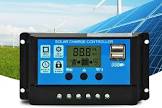
Once panel and battery sizes are balanced, the charge controller must handle the current.
Controller Sizing Formula
Panel watts ÷ Battery voltage × 1.25
Example:
1,200W ÷ 24V × 1.25 = 62.5A → use 80A MPPT
Undersized controllers create hidden imbalance.
8. Signs Your System Is Properly Balanced
• batteries reach full charge daily
• charging current is stable
• inverter runs cool
• backup time remains consistent
• no frequent BMS or inverter errors
If all these are present, your system is correctly balanced.
9. Installer Checklist for Proper Balance
Before installation, confirm:
• daily load (Wh)
• battery storage (Wh)
• panel capacity (W)
• sun hours
• controller rating
• battery type (lithium or lead-acid)
Skipping any of these invites failure.
Conclusion
Balancing solar panel size with battery capacity is the foundation of a reliable solar system. When panels and batteries work in harmony, systems last longer, clients are happier, and installers avoid callbacks.
Correct balance is not guesswork—it’s calculation, experience, and proper design.