Solar Inverter Failure: Common Causes and Proven Fixes from My Field Experience
When Your Solar Inverter Fails Without Warning
Over the years as a solar energy installer, I’ve seen countless homeowners panic when their solar inverter suddenly fails — everything shuts down, and they’re left wondering what went wrong.
Solar inverter failure simply means your inverter has stopped functioning properly — either it’s tripping repeatedly, refusing to turn on, or displaying error codes. While some failures are temporary, others signal deeper problems that, if ignored, can cause long-term damage or even fire hazards.
From experience, most inverter failures come down to poor system design, overloading, or installation mistakes — all of which are easily preventable. In this post, I’ll share the real causes of solar inverter failure, how to fix them, and how the Globisun App can help you prevent them through accurate solar sizing and diagnostics.
Common Causes of Solar Inverter Failure
Let’s explore the major reasons why your solar inverter might be failing or tripping off frequently.
1. Overloading or Poor Sizing
One of the biggest culprits behind solar inverter failure is system overload. This happens when you connect more appliances than your inverter is designed to handle. When this occurs, the inverter either shuts down automatically or burns internal components over time.
I’ve seen many systems fail simply because they were poorly sized during installation. To avoid this, always calculate your total load before buying or upgrading your inverter.
👉 The easiest way to do this is with the Globisun App — it accurately calculates your inverter, battery, and panel requirements so you never exceed your inverter’s capacity.
2. Voltage Fluctuations (Low or High Input)
Voltage instability is another common trigger of inverter faults. If your solar panels or grid supply deliver voltage that’s too low or too high, your inverter automatically shuts down to protect itself.
These fluctuations can be caused by:
- Faulty or undersized DC cables
- Too many panels connected in series
- Poor grounding or loose wiring
To fix this, always monitor your DC input voltage and ensure your wiring follows your inverter’s specification limits.
3. Loose Connections or Short Circuits
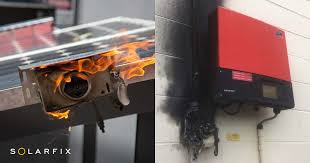
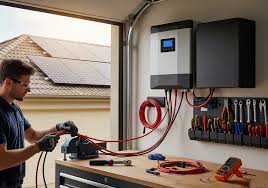
A loose wire, burnt connector, or poorly crimped terminal can easily lead to solar inverter failure. When terminals spark or short, your inverter’s internal protective circuit trips off.
I advise checking your DC terminals, battery lugs, and AC output regularly. Tight connections and clean terminals can save you from unexpected inverter shutdowns or permanent damage.
4. Faulty Batteries or Mismatched Panels
Your inverter relies heavily on properly functioning batteries and solar panels. If your batteries are weak, mismatched, or unevenly charged, it can cause your inverter to malfunction.
Similarly, combining panels of different voltages or brands without proper configuration often results in inverter instability.
Before you blame your inverter, check the compatibility of your system components using the Globisun App. It helps confirm that your inverter, battery, and panels are correctly matched.
5. Overheating and Poor Ventilation
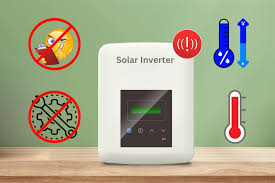
Every inverter has a temperature limit. When the surrounding environment gets too hot, the inverter triggers thermal protection and shuts down. Continuous overheating can lead to permanent inverter failure.
To avoid this:
- Install your inverter in a cool, shaded, and ventilated area
- Clean air vents regularly
- Avoid stacking appliances around it
- Recheck your load sizing with Globisun to prevent excessive heat from overloads
Quick Fixes and Long-Term Prevention
Whenever I’m called to troubleshoot inverter issues, these are the key steps I take:
✅ Inspect connections – Tighten all DC and AC terminals, and replace damaged connectors.
⚡ Check voltage readings – Compare your input/output voltage with inverter specs.
🔋 Avoid overload – Don’t plug in heavy appliances beyond the inverter’s capacity.
🧮 Recalculate your system sizing – Use Globisun before adding new devices or expanding your solar setup.
🧰 Regular maintenance – Clean, test, and inspect your solar setup every few months.
These small actions make a huge difference in keeping your inverter healthy for years.
How the Globisun App Prevents Solar Inverter Failure
The Globisun App is more than just a calculator — it’s a smart guide that helps you design safe, efficient, and long-lasting solar systems.
With Globisun, you can:
- Instantly calculate your inverter, battery, and panel sizes
- Detect potential overloads before installation
- Understand correct system configurations
- Reduce the risk of inverter shutdowns or overheating
As a solar installer, I’ve seen the difference accurate sizing makes — it prevents solar inverter failure, saves money, and ensures your solar setup performs at its best.

Conclusion: Stop Solar Inverter Failure Before It Starts
Solar inverter failure is frustrating, but the truth is, it’s almost always preventable. From what I’ve seen in the field, the three golden rules are accurate sizing, solid wiring, and proper maintenance.
I always tell my clients — the easiest way to prevent inverter failure is by getting your system sizing right before installation.
That’s why I personally recommend the Globisun App for every solar user. It takes the guesswork out of system design and helps you build a safer, more reliable solar power setup.
👉 Download the Globisun App today to check your solar configuration, fix sizing errors, and protect your inverter from future failures.