
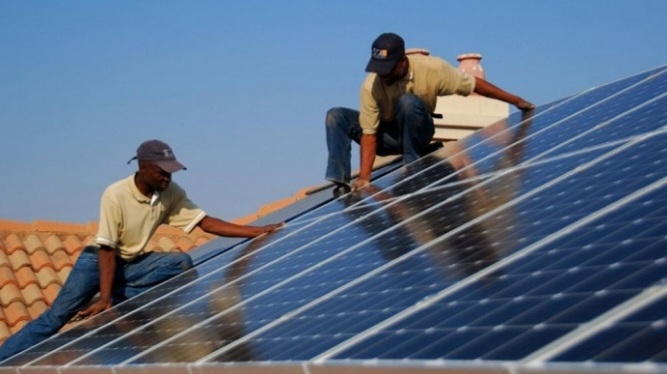
10 Solar Mistakes Nigerians Make (And How to Avoid Them)
Solar is becoming the number one solution for Nigerians tired of estimated bills, blackouts, and high fuel costs.
But while solar works beautifully, many people end up disappointed because of simple but costly mistakes.
If your solar system isn’t performing the way you expected, chances are you’re making one or more of these 10 mistakes.
Let’s break them down — and show you exactly how to avoid them.

1. Buying Solar Without Proper Load Calculation
Most Nigerians buy solar blindly.
They don’t calculate how many watts they use at night or during the day.
The result?
The system gets overloaded and fails within months.
How to avoid this:
✔ Always calculate your load before buying anything
✔ Use the Globisun App to calculate your exact solar needs automatically
2. Pairing Big Batteries With Small Solar Panels
This is one of the most common mistakes.
For example:
- 200Ah battery
- 200W – 300W panel
This will never charge fully, especially in rainy season.
How to avoid this:
✔ Match battery capacity with panel wattage
✔ Rule of thumb: Panel wattage should be at least 1.5× battery Ah
3. Allowing Panels to Stay Dirty for Months
Nigeria’s weather (dust, harmattan, pollution) reduces solar efficiency drastically.
Dirty panels can lose 20–40% of their power.
How to avoid this:
✔ Clean panels every 2–4 weeks
✔ Clean weekly during harmattan
4. Buying Cheap Charge Controllers and Inverters
Many go for the cheapest option — and pay for it later.
Cheap controllers:
- overcharge batteries
- undercharge batteries
- fail within months
Cheap inverters:
- waste battery power
- shut down unexpectedly
How to avoid this:
✔ Buy from reliable brands
✔ Choose MPPT controllers over PWM
5. Running Heavy Appliances on Small Systems
Small solar systems can’t run:
- Freezers
- Air conditioners
- Water heaters
- Irons
- Blenders
- Pressing irons
People still try — and end up damaging the battery.
How to avoid this:
✔ Know what your inverter size can carry
✔ Don’t run heavy load on small systems
6. Using Undersized or Poor-Quality Wiring
Thin wires cause:
- Voltage drop
- Low charging
- Heat
- Power loss
- Fire risks
How to avoid this:
✔ Use 4mm²–6mm² for panels
✔ Use 10mm²–16mm² from battery to inverter
7. Installing Panels in the Wrong Direction
Many panels face east, west, or even flat.
This drastically reduces sunlight exposure.
How to avoid this:
✔ Face panels south (best for Nigeria)
✔ Tilt them between 10°–15°
8. Ignoring Shading
Even small shade from:
- water tanks
- trees
- TV antennas
- neighbors’ walls
…can reduce output by up to 40%.
How to avoid this:
✔ Install panels where there is zero shading from 9am–4pm
9. Over-discharging the Battery Every Night
Running your battery to empty kills its lifespan quickly.
Symptoms:
- Battery dying before morning
- Voltage dropping fast
- Inverter beeping constantly
How to avoid this:
✔ Reduce your night load
✔ Use inverter settings that prevent deep discharge
✔ Check battery health regularly
10. Not Using a Solar Expert for Sizing or Installation
Wrong installation ruins even good equipment.
Common installer mistakes:
- Wrong cable sizing
- Wrong tilt angle
- Wrong connections
- Wrong protection devices
- Oversizing/undersizing systems
How to avoid this:
✔ Work with trained solar professionals
✔ Always request a site inspection
✔ Use apps like Globisun for sizing accuracy
⭐ Final Thoughts
Solar works perfectly when done right.
But one mistake can cost you:
- reduced backup time
- burnt batteries
- wasted money
- system failure
Avoid these 10 mistakes and your solar will perform:
✔ longer
✔ stronger
✔ more efficiently
✔ and with lower maintenance cost


